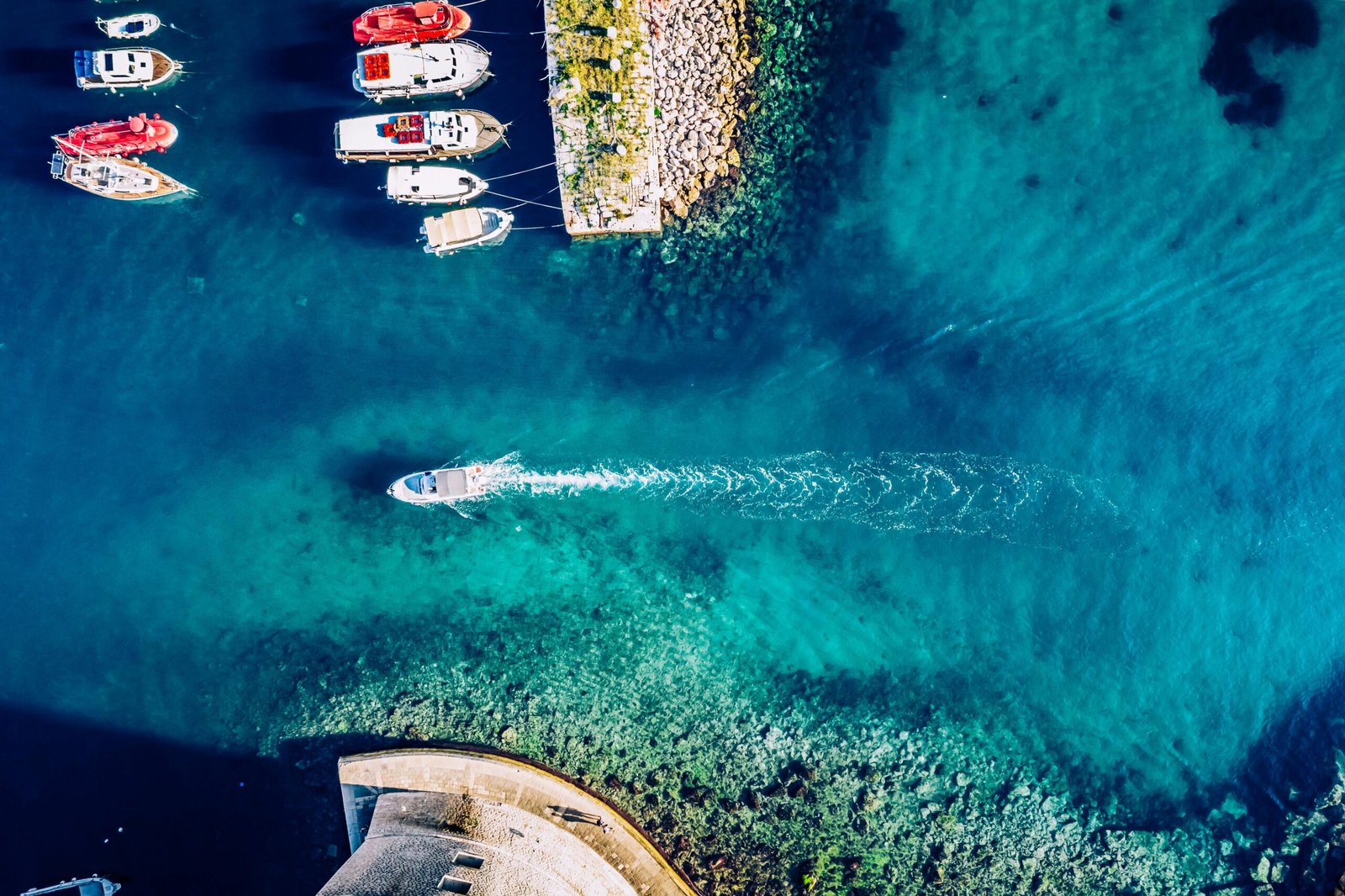
In the cartography of the Adriatic, Hvar is the exclamation point, but Vis is the ellipsis.
For the modern traveler, Hvar has become an exercise in curated chaos—a performance of luxury that requires an audience. But as we move deeper into 2026, a specific fatigue has settled over the global wanderer. The desire for “spectacle” has been replaced by a hunger for “inertia.” We no longer want to see; we want to disappear.
To reach Vis is to commit to the horizon. It is the furthest inhabited island from the Croatian mainland, a two-hour puncture into the blue that acts as a natural filter. Those who are merely “touring” often lack the patience for the ferry’s slow crawl. Those who remain are rewarded with a landscape that does not care if they are there or not.
The Architecture of Silence: The 45-Year Sleep
To understand why Vis feels different, one must understand the weight of its 20th-century solitude. From 1944 until 1989, Vis was not an island in the Mediterranean sense; it was a limestone fortress. As a strategic Yugoslav military base, it was scrubbed from the maps of the curious.
While the rest of Europe was erecting concrete hotels and paving coastal promenades to invite the world in, Vis was digging in. It was a subterranean world of cold-war paranoia and naval secrets. When the military finally withdrew in the late 80s, they left behind an island that had missed the “Golden Age” of destructive tourism.
This isolation was a preservation act by accident. Because the world was forbidden from visiting, the vineyards remained small and family-owned. The stone houses in Kut did not become boutique hotels; they remained homes. In 2026, this lack of “polish” is the island’s most valuable currency. There is a specific dignity in a place that has been left alone for forty years; it develops a thick skin and a slow heart.
The Two Faces: Vis Town and the Philosophy of Kut
The ferry deposits you in Vis Town, a sweeping crescent of gray stone and salt-bitten shutters. But the town is a tale of two temperaments: Luka and Kut.
Luka is the functional heart—the place of arrivals, departures, and the necessary commerce of island life. But as you walk eastward, the promenade narrows and the atmosphere shifts. You enter Kut. Here, the architecture is a conversation between the Venetian influence and the rugged necessity of the Adriatic.
In Kut, the streets are not designed for “flow”; they are designed for shade and defense. The kalas (narrow alleys) twist in ways that break the wind and trap the scent of drying laundry and wild rosemary. Here, the concept of fjaka—the Dalmatian art of doing absolutely nothing while the soul expands—is not a postcard slogan. It is a survival strategy. To sit in a stone courtyard in Kut as the afternoon sun hits the 4th-century BC ruins is to realize that the “modern world” is merely a thin veneer over a much deeper, more silent history.
The Subterranean Ghost: The Jastog and the Bunkers
To explore the interior of Vis is to walk over a hollowed-out world. There are more than 30 military installations hidden in plain sight.
The Jastog submarine tunnel is perhaps the most haunting. A jagged concrete mouth cut into the side of a cliff, it was designed to hide naval vessels from the sky. Standing inside, the water is an unnerving, lightless green. There is no plaque here, no gift shop, no tour guide with a microphone. It is a raw scar of history.
Further inland, Tito’s Cave sits high on the slopes of Mount Hum. It is modest, cramped, and damp—a reminder that the history of this region was forged in the dirt, not in the palaces. These sites are not “attractions”; they are artifacts. They lend the island a sense of gravity. You are never just on a beach; you are on the roof of a bunker.
Komiža: The Persistence of the Falkuša
If Vis Town is the island’s brain, Komiža is its salt-stained heart. Located on the western edge, it faces the open sea with a defiant stance.
For centuries, the men of Komiža were the finest fishermen in the Adriatic, navigating the treacherous waters to the volcanic outcrop of Jabuka. Their vessel was the falkuša—a wooden boat with removable washboards that allowed it to transition from a cargo carrier to a nimble predator of the sea.
In 2026, the falkuša is more than a museum piece; it is a symbol of resistance against the homogenization of the Mediterranean. To watch one of these boats move through the water is to see a design perfected by necessity over 500 years. The town itself feels like an extension of the harbor. The houses are tall and narrow, built close together to protect one another from the bura (the fierce north-east wind).
The Landscape of Scarcity: Wine and Salt
The culinary identity of Vis is defined by what the land refuses to give. Water is scarce; the soil is rocky. This makes everything that grows here intense.
The Vugava grape is a relic of the Greeks, who brought it here over 2,000 years ago. It is a white wine that tastes of sun-baked stone and dried apricots. It is not “crisp” or “refreshing” in the commercial sense; it is heavy, golden, and honest.
Then there is the Viška pogača. It is a peasant dish—a thick dough filled with salted sardines, caramelized onions, and capers. It was designed to last for days on a fishing boat. It is salty, oily, and pungent. To eat it is to understand the labor that has defined this island for millennia. It is a rejection of the “fusion” and “molecular” trends found on the mainland. It is the taste of a closed system.
The 2026 Perspective: Why Disconnection Is the New Luxury
We live in an era of constant tethering. Our movements are tracked, our preferences predicted, and our “experiences” often pre-packaged before we even arrive.
Vis offers the rare luxury of the “dead zone.” There are still parts of the island where the signal drops, where the maps are slightly off, and where you have to rely on the directions of an old man sitting under a carob tree.
The “future” of travel isn’t about more connectivity; it’s about better isolation. Vis represents the “Old Mediterranean”—a place where the day is measured by the movement of the shadow across the piazza rather than the notifications on a screen.
Field Notes & Logistics
For those ready to make the crossing, here are the essential links to navigate the island’s logistics without a middleman.
The Crossing (Split to Vis)
You have two options: the slow car ferry (which allows you to decompress) or the fast catamaran.
- Jadrolinija: The national carrier. Use this for the car ferry (2.5 hours) or their catamaran service. Book Official Tickets
- Krilo (Kapetan Luka): A private catamaran service that is often faster (1.5 hours) and slightly more comfortable for foot passengers. View Schedule & Book
Finding Shelter (Villas & Stone Houses)
Avoid the generic aggregators. The best inventory—historic stone houses in Kut or secluded bays—is held by local agencies.
- Navigator Agency: The go-to for high-end villas and authentic stone houses in Vis Town and Kut. Browse Listings
- Vis Special: A local agency that handles both accommodation and bespoke tours (they are excellent for military history excursions). Visit Website
Experiences & The Interior
- The Blue Cave & Boat Rentals: While you can book group tours at the harbor, Vis Rent offers private boat rentals and organized tours to Biševo that beat the crowds. Rent a Boat
- Roki’s (The Peka Pilgrimage): This is the most famous inland dining experience. You must reserve your “Peka” (meat/octopus under the bell) at least 24 hours in advance. They also offer a shuttle service from Vis Town. Reserve Your Table
Official Resources
- Vis Tourist Board: For up-to-date ferry schedules, local events, and historical info. Official Tourist Board