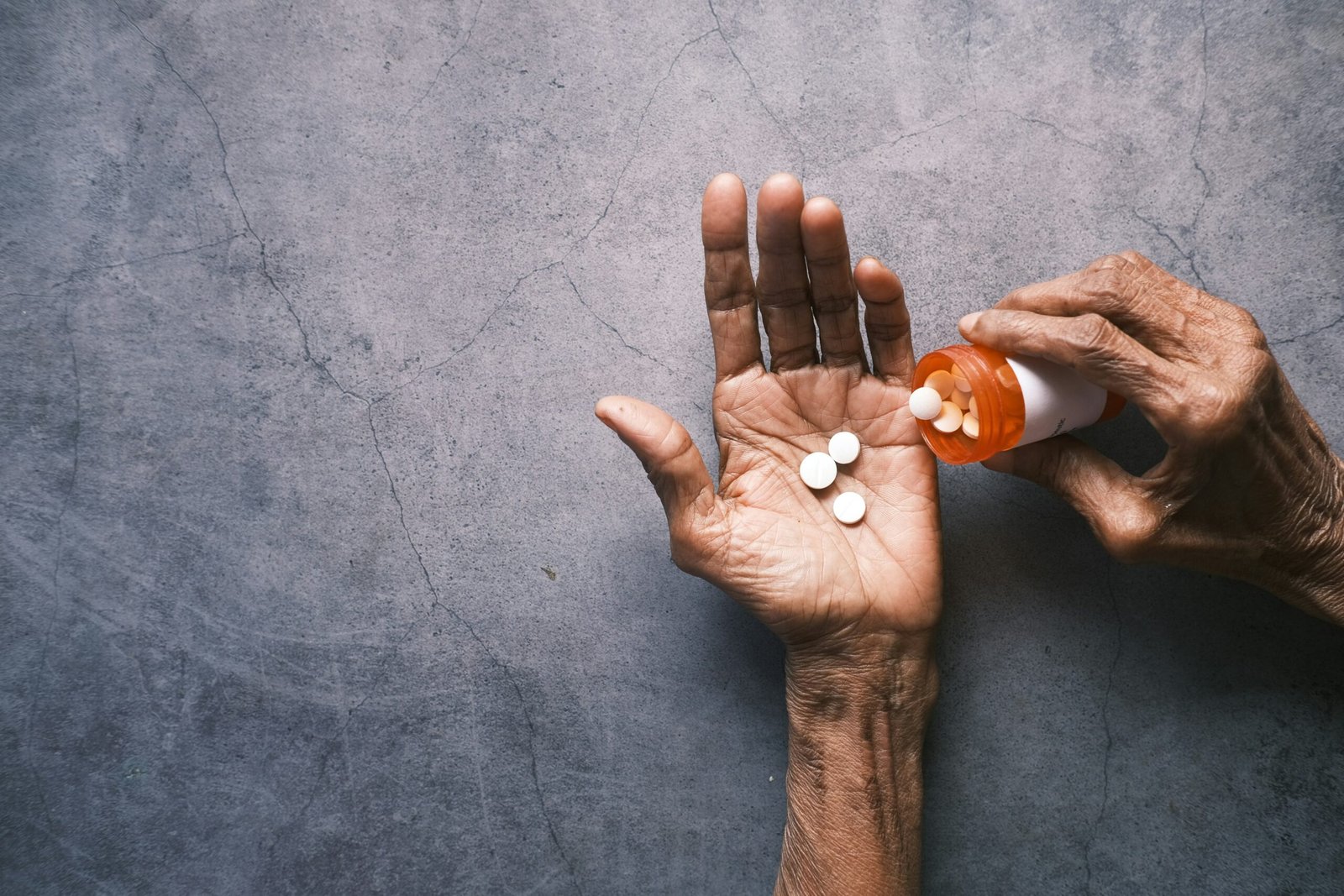
Let me describe someone you might recognize.
They’re educated. They’re busy. They’ve got a persistent headache that’s been hanging around for a week, and they’ve already cross-referenced it against four different health websites. They know it’s “probably just stress.” So they take two ibuprofen — or maybe three, because two didn’t really work last time — and they get on with the day. They’ve done this dozens of times. It feels like responsible self-care.
It might not be.
Self-medication is one of the most normalised health behaviours in the world — and one of the most quietly dangerous. Not because treating minor symptoms at home is wrong. It isn’t. But because the line between “managing a known, minor condition” and “suppressing warning signals from a body that is trying to tell you something” is far thinner than most people realise.
This is the conversation that needs to happen.
Why We Do It — And Why That Logic Makes Sense, Up to a Point
Let’s be honest about the real reasons people self-medicate, because dismissing them doesn’t help anyone.
The cost of healthcare in many parts of the world — including here in Ghana — makes professional consultation genuinely inaccessible for many people. That’s not irresponsibility; that’s economics. The wait time to see a specialist is sometimes measured in weeks. A pill from the pharmacy down the road provides something that feels like control right now. And the stigma around mental health diagnoses is real: many people would rather quietly manage their anxiety with something unprescribed than sit across from a doctor and hear it named.
None of this is irrational. But all of it carries risks that deserve to be named clearly.
The Most Dangerous Thing Self-Medication Does: It Silences the Alarm
Pain is not an inconvenience. Pain is information. It is your body’s primary communication system — its way of saying “something in here needs attention.”
When you suppress that signal without understanding its source, you are not solving a problem. You are cutting the wire to the smoke detector while the fire continues to grow.
Consider the person who has been managing their “heartburn” with over-the-counter antacids or proton pump inhibitors for a year. The symptoms ease. They carry on. But what if the underlying cause is not ordinary acid reflux? What if it’s an evolving peptic ulcer? What if it’s early-stage esophageal cancer? By the time the OTC drugs stop working and the person finally seeks professional evaluation, the disease that was whispering at stage one may now be shouting at stage three or four.
This is not a hypothetical. It is one of the most common diagnostic delay patterns in clinical medicine.
The same dynamic plays out with chest tightness written off as “anxiety” — which turns out to be early coronary artery disease. With persistent fatigue managed with supplements — which turns out to be a thyroid disorder. With recurring infections treated with leftover antibiotics — which turns out to be an immune deficiency. The symptom is managed. The cause is never found.
The Global Emergency Nobody Talks About Enough: Antibiotic Resistance
If self-medication were purely an individual risk, it would be a personal tragedy. But it isn’t purely individual — and the reason is antibiotics.
When a person takes a leftover antibiotic for a viral infection like the flu, the drug does nothing to the virus. But it does come into contact with the billions of bacteria living inside the human body. Some of those bacteria survive the exposure. They adapt. They pass on the genetic modifications that allowed them to survive — to other bacteria, in other bodies.
This is how we are creating superbugs. Multi-Drug Resistant Tuberculosis. MRSA. Infections that do not respond to the antibiotics we have. The
World Health Organization has been explicit about this: if current trends continue, common infections that are easily treatable today could become death sentences by 2050. This is not science fiction. It is the direct consequence of treating antibiotics as a casual, always-available solution to whatever is bothering us today.
Antibiotics are a shared global resource. Every time one is used inappropriately, the resistance that results belongs to all of us.
The Drugs That Feel Safe Because They’re Sold Over the Counter
There is a widespread belief that prescription drugs are the dangerous ones and over-the-counter drugs are safe. This belief kills people.
Acetaminophen — the active ingredient in paracetamol and many combination cold medicines — is the leading cause of acute liver failure in the United States. The gap between a therapeutic dose and a toxic one is narrower than most people realise. Because it appears as an ingredient in multiple products simultaneously, it is easy to exceed safe limits without knowing it: one tablet for a headache, a sachet of cold medicine with the same ingredient for a blocked nose, and suddenly you are at hepatotoxic levels.
NSAIDs — ibuprofen, naproxen — inhibit the prostaglandins that protect your stomach lining and maintain blood flow to your kidneys. Occasional use under normal circumstances is generally fine. Chronic use without medical oversight is a pathway to gastrointestinal ulcers and kidney damage. Permanent kidney damage. The kind that ends with dialysis.
The label exists for a reason. The dosage limits exist for a reason. They are not conservative suggestions. They are clinical boundaries derived from the point at which the drug stops helping and starts damaging.
How Self-Medication Becomes Dependency — The Biology
This is the part that most people find uncomfortable to sit with, because it challenges a particular narrative about addiction: that it is a moral failure, a character weakness, a choice made by a certain type of person.
It is not. It is a brain chemistry event — and it can happen to anyone.
Most drugs that carry addiction risk target the brain’s reward circuitry. When you take an opioid for back pain, a benzodiazepine for sleep, a stimulant for focus — the brain receives a dopamine surge that it did not generate itself. To protect its own equilibrium, it begins to down-regulate its natural receptors. It produces less of its own dopamine. Less of its own calming chemistry. The baseline shifts.
Now you need the drug not to feel good, but to feel normal. The dose that once worked no longer works. Natural pleasures — exercise, food, connection — become flat. This is not weakness. This is your brain adapting to the chemical environment you created for it.
The National Institute on Drug Abuse documents this process in detail. What begins as “just taking the edge off” or “just getting through the week” can, through this biological mechanism, become a physiological requirement for basic functioning. Nobody chooses this outcome. It happens through a predictable series of neurological adaptations.
Dangerous Combinations: When “Safe” Drugs Meet Each Other
A doctor managing your medications keeps a record of everything you’re taking — specifically to prevent dangerous interactions. When you’re self-medicating, nobody is keeping that record.
Two of the most common and deadly self-medication combinations:
OTC sleep aids or unprescribed sedatives plus alcohol. Both are central nervous system depressants. Together, they can slow your respiratory system to the point of stopping. This is a common cause of accidental overdose — not from reckless drug use, but from two “not that serious” substances taken together.
Herbal supplements plus prescription medications. St. John’s Wort — widely considered harmless because it’s “natural” — is a potent activator of liver enzymes that can render birth control pills, blood thinners, and heart medications completely ineffective. The word “natural” does not mean “non-reactive.” Plants are chemicals. They interact with other chemicals. The mechanism does not care about the source.
When Is It Actually Appropriate to Self-Medicate?
This article is not an argument that you need a doctor’s prescription for every sneeze. The goal is health literacy — knowing the difference between when self-care is appropriate and when it’s a substitute for something you actually need.
Self-treatment is reasonable for: minor, self-limiting conditions like common colds, seasonal allergies, or minor muscle strains — where the diagnosis is clear and the condition resolves on its own. Short-term use is the key phrase here. Managing a recurrence of a previously diagnosed condition — a known history of cold sores, a previously treated UTI — is generally reasonable.
The red line: if symptoms persist beyond three to five days without improvement, the “self-care window” has closed. Go and be seen.
And regardless of what you’re taking: read the label every single time. Consult your pharmacist — they are the most underutilised clinical resource in healthcare, specifically trained in drug interactions. Disclose everything you are taking when you see a doctor. Everything. Including the supplements. Including the herbal tea. Including the multivitamin. “Natural” does not exempt it from the interaction equation.
If You Recognise Yourself in This Article
If reading this has surfaced a recognition that your use of a particular substance — whether it’s painkillers, sleep aids, stimulants, or anything else — has become something you depend on to function: that recognition is important. Act on it.
SAMHSA’s National Helpline (1-800-662-HELP) is available 24/7, free, and confidential, providing treatment referral and information. The Mayo Clinic’s guide on talking to your doctor about addiction is a practical resource for navigating that conversation. Narcotics Anonymous offers community-based support for anyone for whom drug use has become a primary problem.
Seeking help is not an admission of failure. It is an act of self-knowledge. And self-knowledge — real, honest, uncomfortable self-knowledge — is always where recovery begins.
The goal is not to distrust medicine. Medicine saves lives every day. The goal is to use it wisely: to understand what you’re taking, why you’re taking it, what it could interact with, and when the symptom you’re treating deserves a professional pair of eyes instead of another trip to the pharmacy.
Your body is complex. The chemicals you put into it are complex. That complexity deserves respect — and respect begins with information.