
The pressure is palpable. You are standing at one of the most significant crossroads of your young adult life, and the noise is deafening. Parents are subtly (or not so subtly) pushing for Law or Medicine. Friends are flocking toward Computer Science because “that’s where the money is.” The media is constantly churning out lists of “Top 10 Dying Careers.”
In this chaotic echo chamber, it is terrifyingly easy to make a choice based on fear rather than fit.
Choosing a university course is not just about picking a label for your degree certificate; it is about deciding how you want to wire your brain for the next three to four years and, arguably, the rest of your life. It is an investment of time, money, and cognitive energy that demands more than a cursory glance at a prospectus.
This guide is designed to silence the noise. We are moving away from the “safe” choices and the herd mentality to help you uncover a path that aligns with your distinct intellect and ambition.
Phase I: The Internal Audit – Who Are You, Really?
Before you even open a university ranking guide or look at a syllabus, you must look inward. The biggest mistake students make is starting with the market rather than the self. If you choose a course solely because it’s trending, you risk burnout before you even graduate.
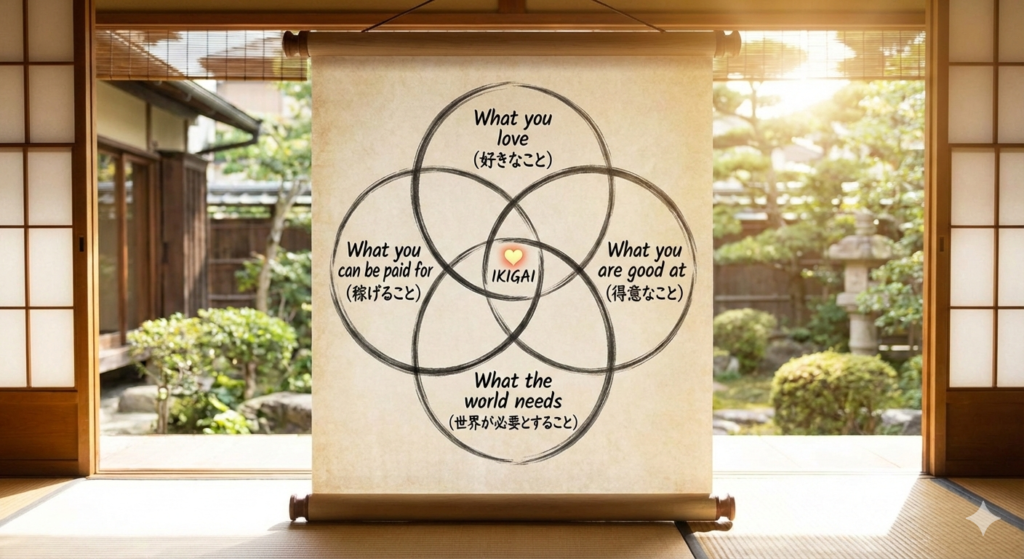
The “Ikigai” Check
Explore
It suggests that true fulfillment lies at the intersection of four circles:
- What you love (Passion)
- What you are good at (Vocation)
- What the world needs (Mission)
- What you can be paid for (Profession)
While university is largely about the first two, the “employability” factor comes from the latter two. However, don’t invert the pyramid. If you start with “what you can be paid for” but lack the talent or passion, you will likely find yourself competing against people who do have that passion, and they will outperform you every time.
Actionable Step:
Create a “Flow State” journal for one week. Note down every activity where you lost track of time. Was it solving a complex math problem? Was it debating a point in history? Was it coding? Was it organizing a team? These moments of “flow” are better predictors of degree success than your grades.
Differentiating Hobbies from Academic Interests
Be careful not to confuse a hobby with a scholarly pursuit. You might love playing video games, but that doesn’t mean you will enjoy the rigid mathematics and logic required for Game Design. You might love reading, but English Literature is about deconstruction and critical theory, not just enjoying a story.
Ask yourself: Do I enjoy the “doing” of this subject, or just the “consuming” of it?
Phase II: Decoding the Curriculum (The Fine Print)
Once you have a general area of interest, you need to become a detective. University marketing brochures are designed to look glossy and appealing, often masking the gritty reality of the coursework. “Business Management” sounds practical, but at one university it might be heavily mathematical, while at another, it might focus on psychology and HR.
1. The Module Deep Dive
Never apply for a course without reading the specific module breakdown for all three (or four) years.
- First Year: usually broad and foundational.
- Second & Third Year: This is where the specialization happens.
If a History course advertises “Modern Warfare” but it’s a third-year elective that only 10 people can take, and the rest of the course is Medieval Agrarian Economics (which you hate), you need to know that now.
Resource: use sites like The Uni Guide or university-specific catalogs to see the exact credits and modules.
2. Assessment Styles: Play to Your Strengths
How do you perform best?
- The Exam Warrior: If you thrive under pressure and have a great memory, look for traditional courses (Law, Medicine, Engineering) that often weight 70-80% of the grade on finals.
- The Coursework King/Queen: If you prefer research, drafting, and refining, look for Humanities or Social Sciences with a higher percentage of continuous assessment.
Attempting to force yourself into an assessment style that conflicts with your neurotype or work style is a recipe for anxiety.
Phase III: Future-Proofing (Ignoring the Trends)
Ten years ago, “Social Media Manager” wasn’t a degree. Today, it’s a career. Conversely, many roles that were “safe” twenty years ago are being automated.
Don’t choose a course based on the job market of today. By the time you graduate, the market will have shifted. Instead, look for Skill Acquisition.
The Transferable Skills Matrix
If you study Philosophy, you aren’t just learning what Plato thought. You are learning:
- Complex problem deconstruction.
- Logic and argumentation.
- Abstract thinking.
These are high-value skills in tech, law, and management. If you study Physics, you are learning data modeling and quantitative analysis, which is highly prized in finance.
The Golden Rule: It is often better to be in the top 10% of graduates in a “niche” subject you love than in the bottom 50% of a “popular” subject like Business or Psychology. Excellence is what hires, not just the subject name.
External Insight: Check the U.S. Bureau of Labor Statistics Occupational Outlook Handbook or Prospects UK for data on projected growth rates, but take them as guidelines, not gospel.
Phase IV: The “Vibe” Check – Context Matters
You are not just choosing a subject; you are choosing an environment.
Teaching Style vs. Learning Style
- Research-Led Universities: Professors are researchers first, teachers second. You will be close to the cutting edge of discovery, but you might receive less hand-holding. This suits independent learners.
- Teaching-Led (or Liberal Arts) Colleges: The focus is on the student experience and pedagogy. You will get more contact hours and support.
Joint Honors and Interdisciplinary Degrees
If you feel torn between two worlds, stop trying to choose one. The modern world values interdisciplinary thinking.
- Arts & Sciences (BASc): A growing number of top institutions now offer degrees that mix humanities and sciences.
- Joint Honors: “Economics and Philosophy” or “Computer Science and Psychology.”
These combinations often signal to employers that you have a versatile brain capable of bridging the gap between technical and human-centric problems.
Phase V: The “Try Before You Buy” Strategy
You wouldn’t buy a car without a test drive. Why invest $50,000+ in education without testing it?
- MOOCs (Massive Open Online Courses): Go to Coursera or edX. Audit a free course in the subject you are considering. If you can’t get through a 4-week free course without getting bored, you certainly won’t survive a 3-year degree.
- Read the “Boring” Books: Don’t just read the pop-science bestsellers. Pick up an introductory textbook. If the dry, technical jargon fascinates you (or at least doesn’t repel you), you’re on the right track.
- The Alumni Interview: Don’t just talk to the admissions office; they are salespeople. Find alumni on LinkedIn. Ask them: “What was the worst part of this course?” Their answer will be more illuminating than the brochure.
Conclusion: Trusting Your Instincts Over the Crowd
There is a distinct difference between a difficult choice and the wrong choice. The right course will likely still feel difficult—it will challenge you, push you, and occasionally frustrate you. But it should never feel like you are wearing someone else’s skin.
If you choose a course because “everyone else is doing it,” you become a commodity. If you choose a course because it ignites your curiosity and aligns with your natural aptitudes, you become a specialist.
The world doesn’t need another mediocre accountant who hates their job. It needs passionate historians, innovative biologists, articulate sociologists, and creative engineers. Be brave enough to step off the conveyor belt and choose the path that makes sense to you.