
In the modern era of biohacking, wearable fitness trackers, and complex nutritional supplements, we often overlook the most fundamental element of human life: H2O. Water is not merely a beverage; it is a biological requirement that governs the efficiency of every system within the human frame. From the firing of neurons in the prefrontal cortex to the filtration of metabolic waste in the renal system, water is the medium through which life happens.
When we discuss the importance of drinking enough water, we are touching on the very essence of metabolic health. Despite its abundance, chronic low-level dehydration is a silent epidemic in the modern workplace and home. This article provides an exhaustive, professional analysis of what happens to the human body when hydration is neglected and how you can optimize your intake for longevity.
1. The Cellular Mechanics of Hydration
To appreciate the necessity of water, one must look at the microscopic level. Our cells exist in an aqueous environment. The fluid inside the cell (intracellular fluid) and the fluid surrounding it (extracellular fluid) must maintain a delicate balance of solutes.
The Sodium-Potassium Pump
The “battery” of your cells is the sodium-potassium pump. This mechanism requires water to facilitate the exchange of ions that create electrical charges. These charges allow your muscles to contract and your nerves to send signals. When you are dehydrated, the concentration of salt in your blood rises, pulling water out of your cells via osmosis. This causes cells to shrink, leading to a breakdown in cellular communication and energy production.
Hydrolysis: Turning Food into Power
We eat food for energy, but that energy is locked away in a molecule called Adenosine Triphosphate (ATP). To release that energy, a water molecule must be added to break the chemical bonds—a process known as hydrolysis. If you are dehydrated, your body cannot efficiently “spend” its energy currency, leading to the profound lethargy often mistaken for a need for caffeine.
2. The Cognitive Tax: How Dehydration Sabotages the Mind
The brain is arguably the most water-dependent organ in the body. It sits encased in cerebrospinal fluid, which acts as both a cushion and a waste-clearance system. Even a 1.5% loss in normal water volume can result in significant cognitive impairment.
Cognitive Flexibility and Task Switching
In a high-pressure professional environment, “cognitive flexibility”—the ability to switch between different concepts or adapt to new information—is vital. Research has demonstrated that dehydrated individuals perform significantly worse on “executive function” tests. Their reaction times slow down, and their ability to catch errors decreases.
The Psychology of “Hanger” and Thirst
Many people confuse thirst signals with hunger signals. The hypothalamus, which regulates both, can sometimes cross wires. When you feel an intrusive craving for sweets or snacks in the mid-afternoon, it is often your body’s desperate attempt to get moisture from food. Chronic dehydration can lead to overeating and, consequently, metabolic dysfunction.
3. The Renal System: Beyond Kidney Stones
The kidneys are the body’s master chemists. They constantly monitor the blood’s volume and concentration, deciding how much water to keep and how much to expel as waste.
The Concentration of Toxins
When water intake is low, the kidneys must work overtime to concentrate urine. This is why dark-colored urine is a primary warning sign. While the kidneys are resilient, constant “heavy lifting” leads to the accumulation of minerals like calcium and oxalate. Over time, these crystallize into kidney stones, a condition that the National Kidney Foundation identifies as being largely preventable through aggressive hydration.
Long-term Renal Strain
Chronic dehydration doesn’t just cause stones; it contributes to chronic kidney disease (CKD). By forcing the kidneys to operate under high pressure to filter thick, viscous blood, we cause microscopic scarring in the nephrons (the filtering units of the kidney).
4. The Cardiovascular Burden
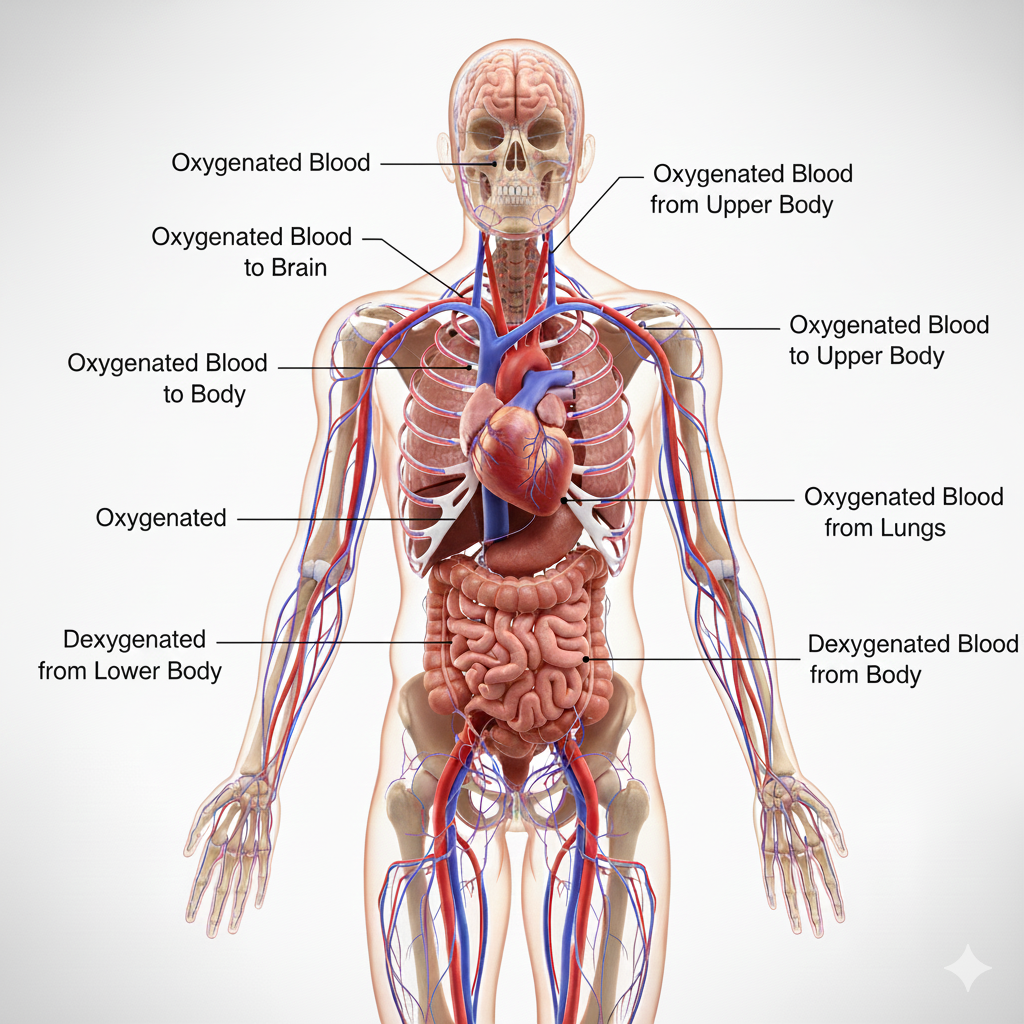
Your blood is approximately 90% water. When you don’t drink enough, your total blood volume decreases. This has a direct, measurable impact on your heart health.
- Heart Rate Elevation: With less blood to move, the heart must beat faster to deliver oxygen to your tissues. This increases your resting heart rate.
- Blood Pressure Fluctuations: Low blood volume can cause blood pressure to drop (orthostatic hypotension), leading to dizziness when standing. Conversely, the body may constrict blood vessels to maintain pressure, leading to hypertension over time.
- Blood Viscosity: Dehydration makes the blood “thicker.” This increases the risk of clots and places additional strain on the vascular walls.
5. Digestive Integrity and the Microbiome
The digestive tract is essentially a long, muscular tube that relies on lubrication to function. From the moment saliva (which is 99.5% water) touches food, hydration is at work.
The Role of Mucus
The stomach and intestines are lined with a protective mucus layer. This layer prevents stomach acid from digesting your own tissue. Dehydration thins this mucus, increasing the risk of heartburn, acid reflux, and even gastric ulcers.
Gut Motility
For waste to move through the colon, it must be hydrated. When the body is thirsty, it will pull water out of the colon’s contents. This results in constipation, which is not just uncomfortable but leads to the re-absorption of toxins that were meant to be excreted. For those interested in gut health, The GI Society offers detailed resources on how hydration supports the microbiome.
6. Thermoregulation and Athletic Performance
Human beings are “homeotherms,” meaning we must maintain a stable internal temperature. Water is our primary coolant.
The Sweat Mechanism
When your core temperature rises, the brain signals the sweat glands. As sweat evaporates off the skin, it removes heat. In a dehydrated state, the body stops sweating to conserve fluid. This leads to heat exhaustion or, in extreme cases, heatstroke, which is a life-threatening medical emergency.
Muscle Elasticity and Recovery
Muscle tissue that is poorly hydrated is more prone to “micro-tears” and takes longer to repair. Furthermore, the removal of lactic acid—the byproduct of intense exercise—is slowed down when the lymphatic system (the body’s drainage system) lacks the fluid it needs to flow.
7. Aesthetic and Structural Health
While health is internal, the external signs of dehydration are often the first things others notice.
The Structural Integrity of the Skin
Skin is the largest organ. Dehydrated skin loses its “turgor”—the ability to bounce back. This makes fine lines more visible and gives the face a hollow, tired appearance. Rather than reaching for expensive topical creams, internal hydration provides the “plumping” effect that many seek.
Joint Lubrication
Our joints are padded by cartilage, which is largely made of water. Between our vertebrae are “discs” that act as shock absorbers. Chronic back pain and joint stiffness are frequently exacerbated by dehydration, as these pads lose their fluid content and begin to compress, leading to nerve impingement and inflammation.
8. Identifying the “Dehydration Triggers”
It isn’t just about not drinking enough water; it’s about what we consume that active depletes us.
- Caffeine and Alcohol: Both are diuretics, meaning they signal the kidneys to expel more fluid than the beverage itself provides. For every cup of coffee or alcoholic drink, an extra glass of water is required to maintain stasis.
- High-Sodium Diets: Processed foods are laden with salt. To process this sodium, the body must draw water from the cells, creating a state of “cellular thirst.”
- Climate Control: Air conditioning and central heating strip moisture from the air. We lose a significant amount of water through “insensible perspiration”—moisture that evaporates from our skin and lungs without us noticing.
9. A Professional Strategy for Optimal Hydration
Achieving optimal hydration is a skill that requires consistency. Here is a sophisticated approach:
The Morning Flush
Upon waking, you are in a state of physiological drought. Drink 500ml (approx. 17oz) of room-temperature water before consuming coffee or food. This “re-primes” the kidneys and jumpstarts the digestive system.
The “Urine Color” Metric
Rather than counting ounces, monitor your output. Your urine should be a pale straw color. If it is clear, you may be over-hydrating and flushing out minerals. If it is the color of apple juice, you are in a state of dehydration.
Strategic Electrolytes
If you drink filtered or “RO” (Reverse Osmosis) water, it may be stripped of natural minerals. Adding a pinch of high-quality sea salt or a dedicated electrolyte drop can improve the absorption of the water into your cells.
10. Conclusion: The Compound Effect of Hydration
The importance of drinking enough water cannot be overstated because its benefits are cumulative. A single day of proper hydration might clear a headache; a year of proper hydration can improve your skin, protect your kidneys, enhance your cognitive output, and stabilize your mood.
We must stop viewing water as an optional accompaniment to our day and start viewing it as the primary fuel for our biological machinery. In a world of complex health advice, the most profound thing you can do for your body today is also the simplest: drink a glass of water.