
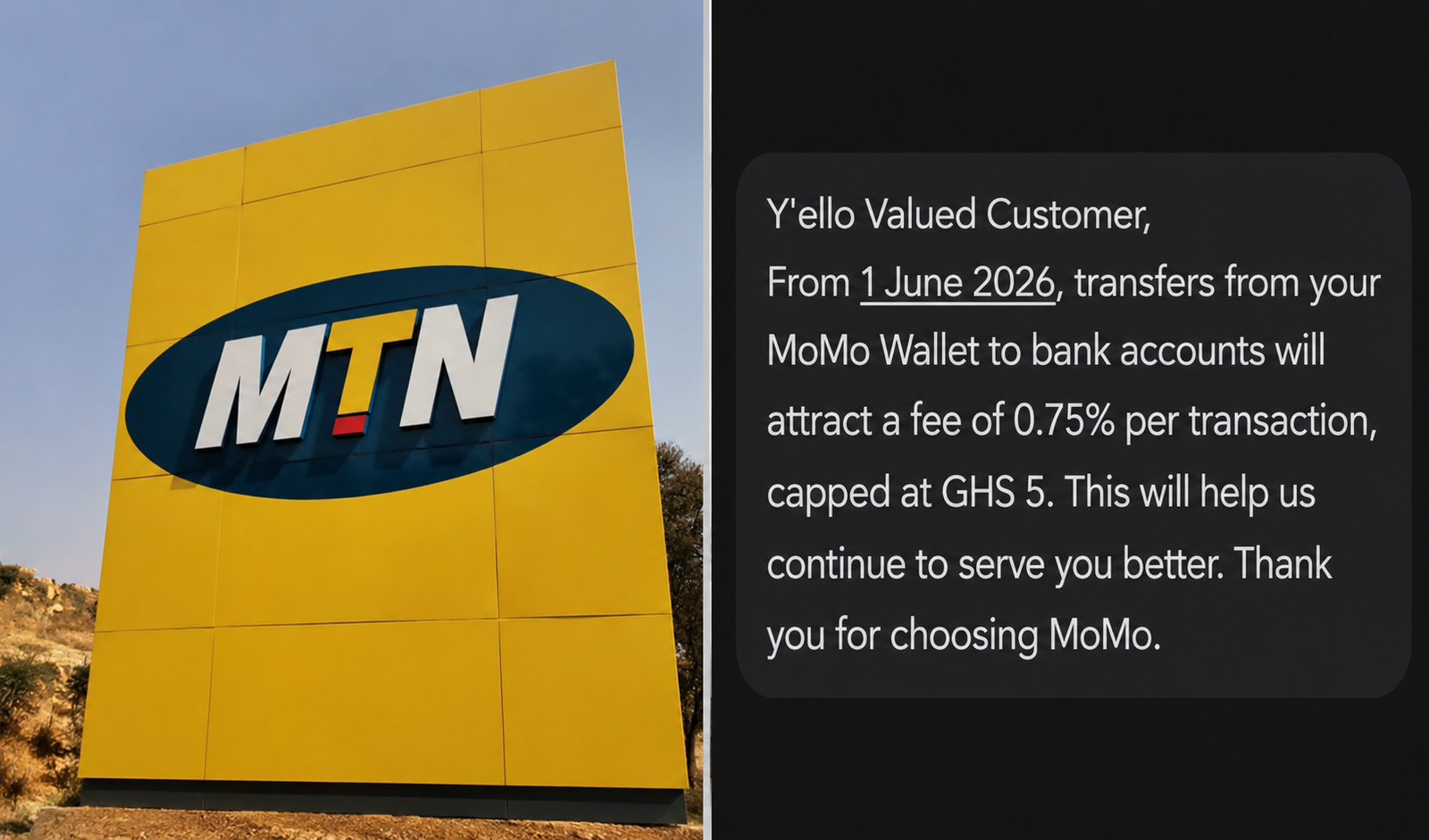
Mobile money users across the country will, from June 1, 2026, incur a charge of 0.75 per cent on every transfer made from a mobile money wallet to a bank account, with the fee capped at GHS 5 per transaction.
The directive, which takes effect in less than a week, applies to all transactions routed from mobile money platforms to linked or unlinked bank accounts, regardless of the mobile network operator involved.
According to the Ghana Revenue Authority, the charge forms part of a broader effort to streamline the taxation of electronic financial transactions and to bring mobile money operations into closer alignment with the formal banking sector.
The policy follows a review of the Electronic Transfer Levy framework, under which government has progressively adjusted transaction charges to reflect growing volumes of digital financial activity in the country.
Customers transacting amounts of GHS 667 or above will pay the maximum fee of GHS 5, as the 0.75 per cent charge on any sum beyond that threshold does not exceed the cap. Transactions below that figure will attract a proportionally lower fee.
Telcos and mobile money operators have been directed to implement the necessary system updates ahead of the June 1 commencement date to ensure seamless application of the charge at the point of transfer.
The Bank of Ghana, in a statement issued to industry stakeholders, urged all regulated entities operating mobile money platforms to communicate the changes clearly to their customers through all available channels, including USSD notifications, mobile applications, and in-branch signage.
Consumer advocacy groups have raised concerns about the cumulative impact of the fee on low-income users who rely heavily on mobile money transfers as their primary mode of moving funds between wallets and savings accounts. Representatives from several such groups have indicated their intention to engage the relevant regulatory bodies for further clarification on exemptions, if any.
Small and medium-sized enterprise operators, many of whom process daily transfers between mobile money collections and business bank accounts, are similarly expected to feel the impact of the new charge. Industry observers have noted that businesses processing multiple transactions per day could see their monthly fee burden increase considerably, even with the per-transaction cap in place.
The Ghana Interbank Payment and Settlement Systems has confirmed that the fee will apply uniformly across all interconnected platforms, meaning transactions processed through interoperability channels will not be exempt from the charge.
The introduction of this fee has also reignited public debate over the government’s broader digital financial inclusion agenda. Critics argue that attaching additional costs to mobile-to-bank transfers risks discouraging the very behaviours that financial regulators have for years sought to promote, namely the movement of money from informal cash transactions into the formal financial system.
Proponents of the measure, however, contend that the cap of GHS 5 ensures that the charge remains reasonable relative to transaction size, and that revenue generated will support the sustainability of digital payment infrastructure across the country.
Users are advised to review their transaction patterns before the June 1 effective date and to consider whether consolidating transfers into fewer, larger amounts may help reduce the frequency of charges incurred.
Further circulars from the Bank of Ghana and the Ghana Revenue Authority detailing the full implementation modalities of the new fee regime are expected before the close of May 2026.