
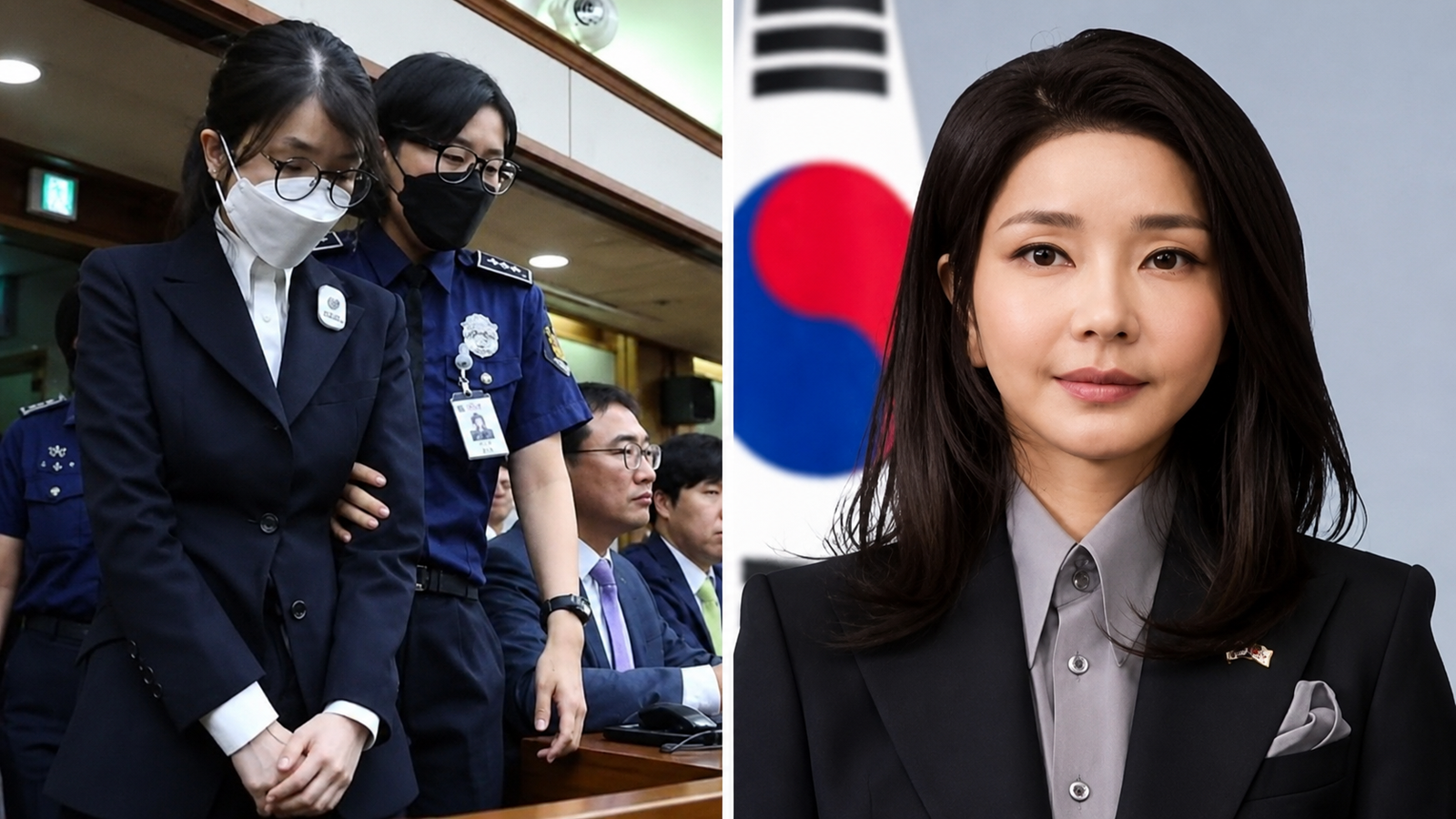
South Korea’s former First Lady Kim Keon Hee has been sentenced to seven years in prison after the Seoul Central District Court found her guilty on all counts of accepting luxury bribes in exchange for political favours and influence over key appointments during her husband’s presidency.
The wife of ousted former President Yoon Suk Yeol received the bribes both before and during his presidency, the lead judge at the Seoul Central District Court confirmed, citing her willingness to use her influence to help people obtain key government or parliamentary posts.
In total, Kim was charged with accepting approximately 300 million won worth of gifts, including over 100 million won worth of jewellery in exchange for a government job for the son-in-law of a construction company chairman. The court found her guilty on all counts.
The list of confiscated items included a Van Cleef & Arpels diamond necklace, a Tiffany brooch, a Dior handbag, a storage case for a gold turtle figurine, and a painting by celebrated Korean artist Lee Ufan.
Presiding Judge Cho Sun-pyo stated: “She exercised her power as first lady to offer jobs and business favours. She received without any hesitation those bribes, which ordinary people would hardly encounter during their lives.”
Wearing a grey suit and a white face mask, Kim, who has admitted receiving the gifts but denied they were tied to favours, quietly listened to the verdict with her head bowed.
The seven-year bribery sentence comes on top of a four-year term Kim is already serving following an appeals court conviction for stock manipulation in April 2026, making her total custodial exposure substantial.
Kim’s legal team criticised the verdict as being based on a “loose interpretation” of insufficient evidence and confirmed plans to appeal.
Her husband, former President Yoon Suk Yeol, was sentenced to life in prison in February for masterminding an insurrection tied to his short-lived imposition of martial law in December 2024. The simultaneous convictions of a former president and his first lady are unprecedented in South Korea’s democratic history.
“Sources: Reuters, NPR, UPI”